

The satellite IoT market is expanding beyond the task of reaching assets outside terrestrial coverage. Providers increasingly compete on how easily devices connect, how satellite and cellular services work together, and how reliably customers can turn a technical platform into a large operational deployment.
Satellite becomes part of the wider IoT stack
Remote connectivity remains important in transport, maritime operations, agriculture, mining, energy, utilities and environmental monitoring. The architecture is changing as satellite services become one part of a broader system of networks, devices, applications and management platforms.
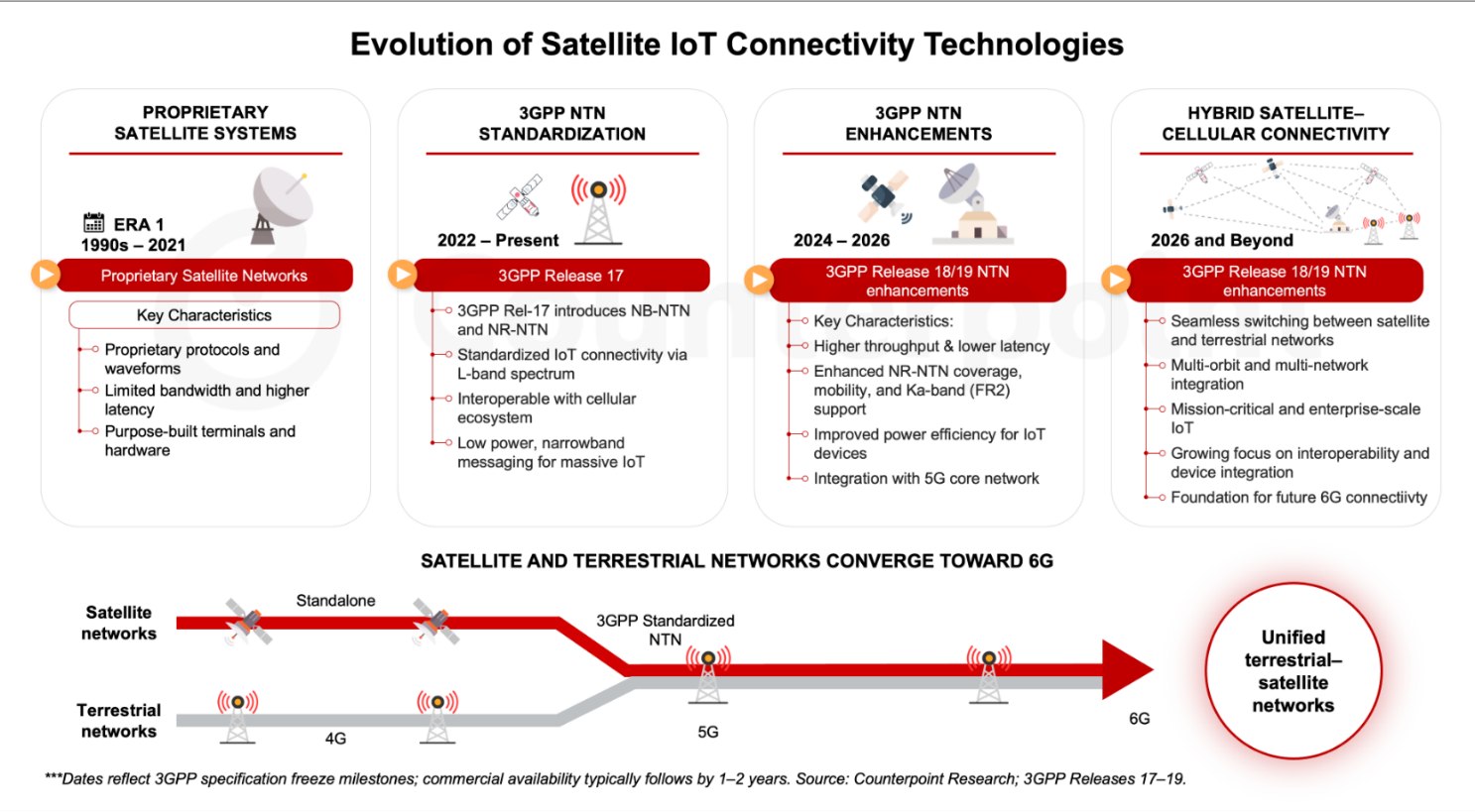
Three developments are driving that change. Standards-based non-terrestrial networks, or NTN, bring satellite communications closer to the cellular ecosystem. Hybrid designs let equipment use terrestrial coverage when available and satellite links beyond it. Mobile operators, module and chipset suppliers, device manufacturers and IoT platforms are also becoming more involved in the satellite market.
The combination gives enterprises more ways to extend an existing deployment. Integration requirements, compatible devices, service partnerships and operating support now matter alongside the reach of the satellite network itself.
Different providers take different routes
Skylo’s approach centres on standards-based NTN and integration with the cellular ecosystem. Its partnership with Vodafone IoT connects their network cores so compatible equipment can move between cellular and NTN services using a single SIM. Sateliot uses 3GPP NB-IoT NTN, and its partnership with Telenor IoT aims to enable compatible NB-IoT devices to move between terrestrial and satellite networks without proprietary satellite hardware.
Established operators are also developing hybrid and standards-based capabilities. Iridium’s 9604 module combines satellite communications, LTE-M and GNSS, while its NTN Direct roadmap extends its standards-based ambitions. Viasat’s combination with Inmarsat adds a broader satellite portfolio, including the narrowband capabilities behind IoT Nano.
ORBCOMM is extending industrial IoT services through SkyWave and hybrid satellite-cellular connectivity. Globalstar is broadening its tracking proposition with the two-way RM200M module. Myriota is adding cellular connectivity to its low-power satellite approach through HyperPulse. These strategies differ, but all move satellite services closer to the wider enterprise IoT environment.
A larger market creates more routes to deployment
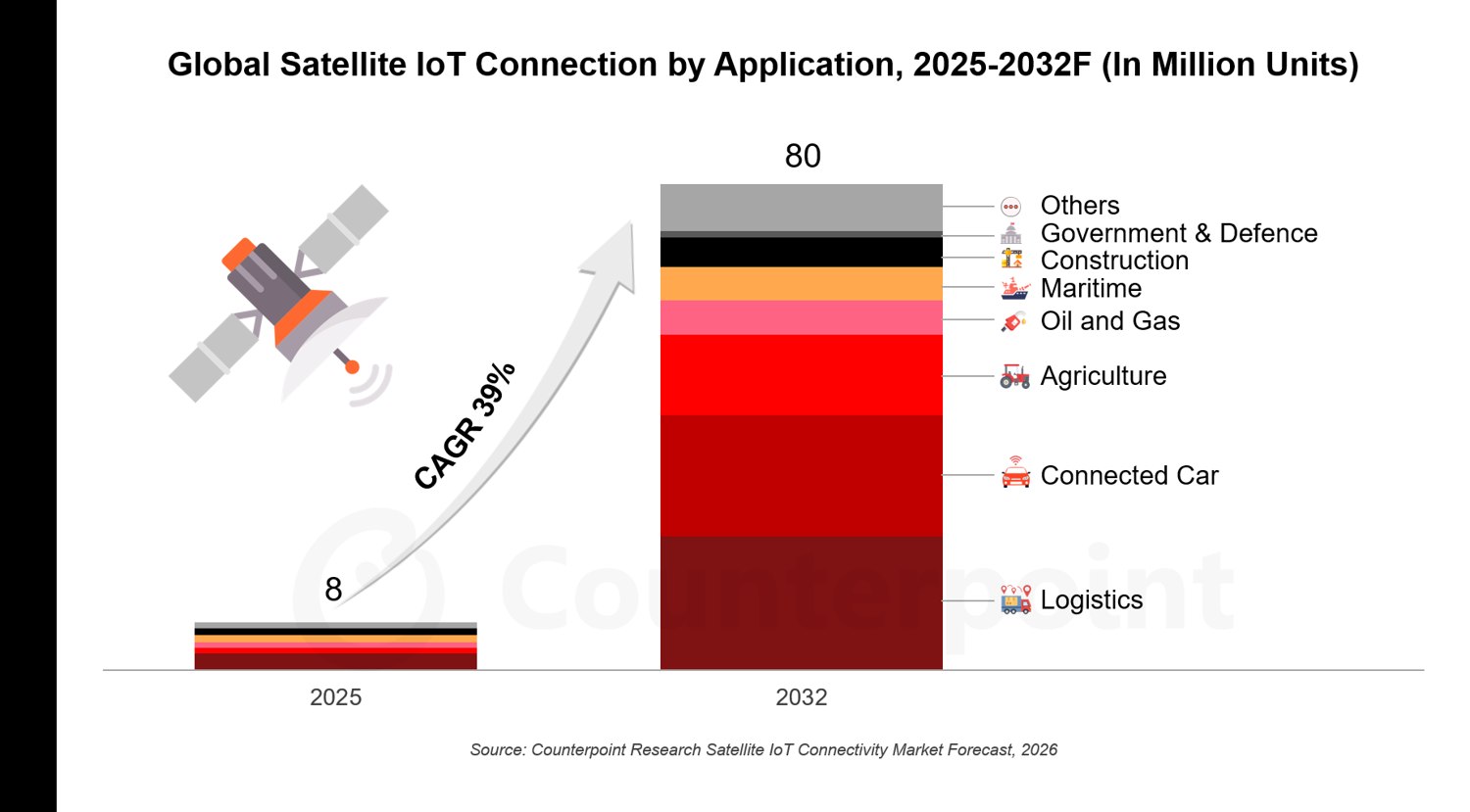
A market forecast projects growth from approximately 8 million satellite IoT connections in 2025 to more than 80 million by 2032. This is a projected expansion, not a measured total for the end of the forecast period. Proprietary satellite networks still carry most connections, while standards-based NTN is gaining momentum.
Standardisation can reduce the need for satellite-specific device components, while declining module and service costs can open more applications. Logistics operators need to follow containers, trailers and other assets beyond cellular coverage. Agricultural deployments can connect livestock trackers, machinery and remote sensors. Automotive is a longer-term opportunity, particularly for emergency and safety-related functions.
Existing providers bring operational networks, installed devices and enterprise relationships. Newer entrants, including Skylo, OQ Technology and Sateliot, pursue opportunities through NTN standards, mobile-operator partnerships and different hardware approaches. A provider’s starting position therefore affects the route it can take to scale.
Leadership depends on capability and execution
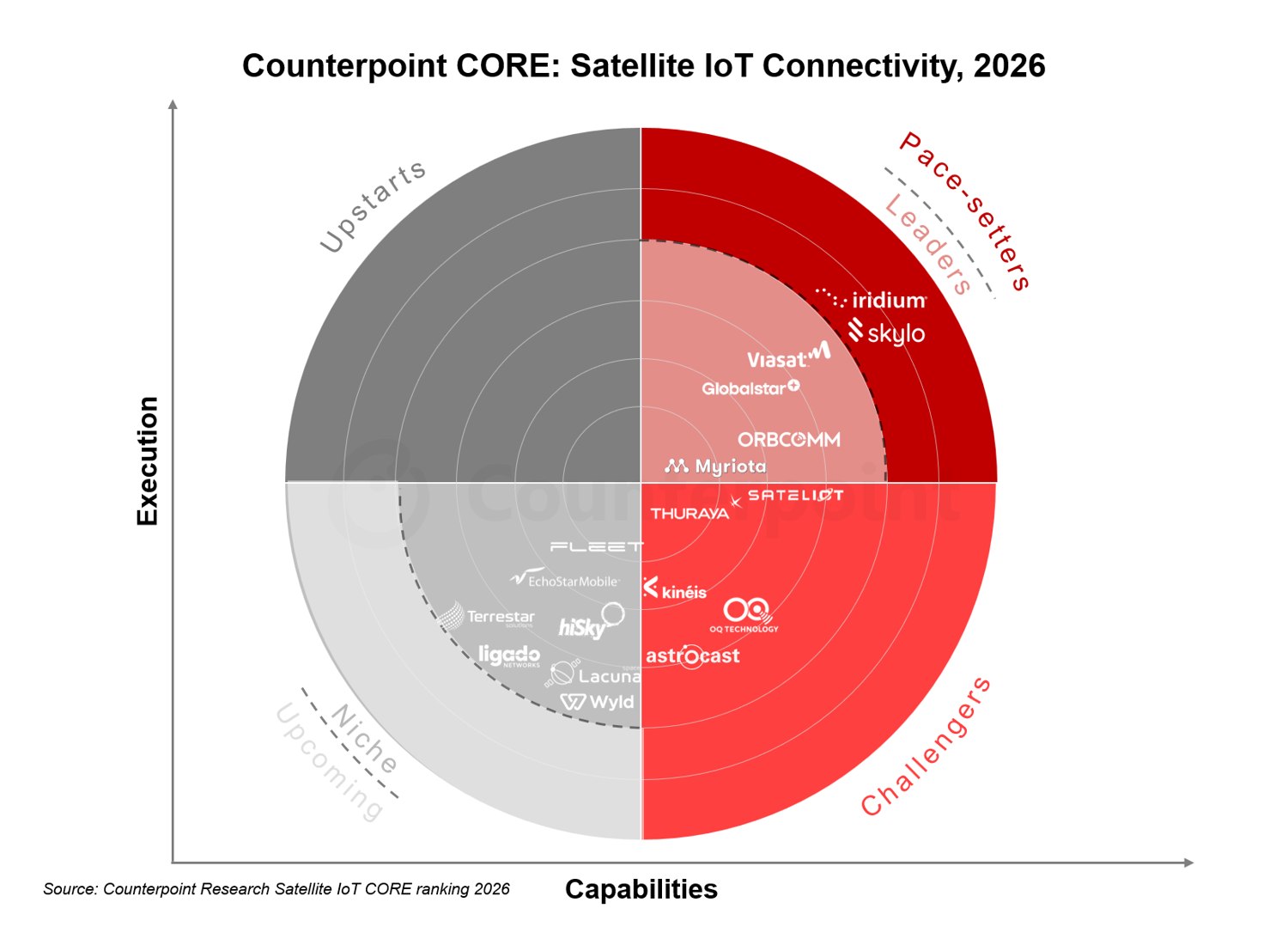
A sector assessment evaluates providers on both technical capabilities and market execution. Its criteria include network performance, reliability, scalability, operational readiness, device ecosystems, platform integration, regulatory readiness and commercial delivery. The framework distinguishes pacesetters, leaders, challengers, upstarts and niche players according to the balance of these capabilities and execution.
Iridium and Skylo occupy the pacesetter positions in that assessment, with different foundations. Iridium has an established global low Earth orbit network, an existing IoT customer base and a broad partner ecosystem. Skylo’s position reflects its integration with mobile operators, device manufacturers and chipset ecosystems around standards-based NTN.
Viasat and Inmarsat together provide a broad set of network assets and established enterprise services. ORBCOMM brings long-standing industrial deployment experience, while Globalstar develops its two-way services from a tracking foundation. Myriota’s low-power and hybrid strategy and Sateliot’s standards-led approach provide additional routes into the market.
Integration is becoming the decisive test
The gap in connectivity capabilities between established leaders and challengers is narrowing. Device integration, interoperability and commercial execution are becoming stronger differentiators: equipment must work across network types, partners must support delivery, and customers need practical distribution and support arrangements.
Hybrid connectivity has particular value for assets that move through, or operate across, areas with uneven terrestrial coverage. In logistics, agriculture, utilities and industrial equipment, the ability to use available terrestrial networks and extend service by satellite can support a more continuous operational picture.
The market remains at an early stage. Established deployments and customer relationships offer advantages, while standards-led designs create new paths into the cellular ecosystem. As more providers complete their portfolios, leadership will increasingly depend on repeatable deployments, ecosystem strength and ease of integration as well as the communications technology itself.