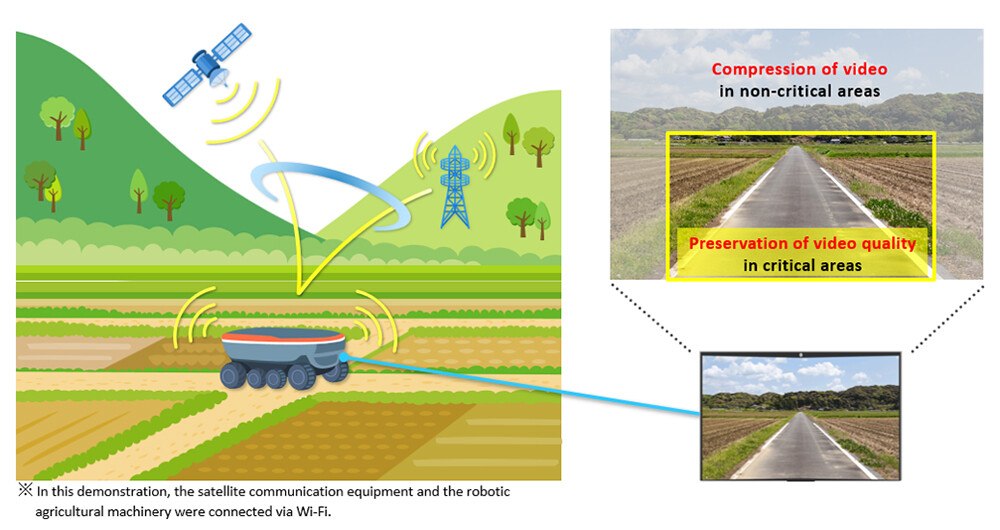
A joint demonstration by NTT, Kubota and NTT DOCOMO combined cellular and satellite communications with adaptive video processing to support remote operation of agricultural robots. The system maintained a usable view of the machine’s surroundings as communications conditions changed.
Uneven coverage complicates remote operation
Robotic machinery needs a dependable flow of data and video when an operator supervises or controls it from another location. Hills, terrain and physical obstructions can weaken mobile signals as a machine travels within a field or moves between fields, creating delays or interruptions.
Hilly and mountainous land accounts for approximately 40% of Japan’s cultivated area. Those conditions make communications reliability a practical issue for expanding robotic farming, particularly where changing signal quality affects the operator’s ability to see the travel path and nearby crops.
Automation is also being developed to address agricultural labour shortages and support more efficient, data-led farm management. A communications system that keeps video useful under changing conditions is one part of making remote machinery more practical.
Combining mobile and satellite links
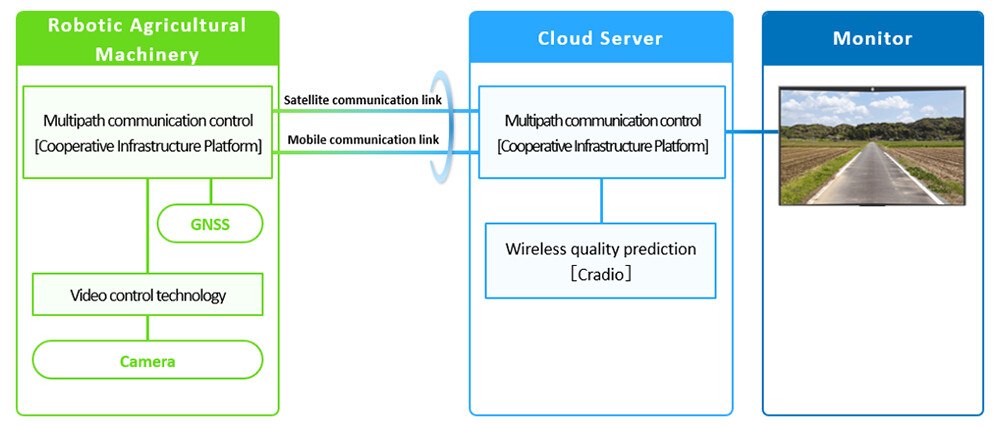
The demonstration applied multipath control across several mobile and satellite connections. Control decisions reflected the quality of each link, allowing satellite communications to supplement mobile coverage where terrestrial performance deteriorated.
NTT supplied its Cradio wireless quality prediction technology and Cooperative Infrastructure Platform for quality-based multi-link control. Predicting connection quality and coordinating the available links helped maintain communications as the machinery encountered uneven network conditions.
Protecting the important parts of the picture
Maintaining a connection also required managing the amount of video being transmitted. The video control system adjusted compression according to predicted bandwidth while preserving more detail in critical regions, such as the machine’s travel path and the crops visible in the camera view.
Less important areas of the image could be compressed more heavily. This coordination between wireless quality prediction and video control supported continuous transmission while retaining sufficient visibility for remote supervision and operation.
Different technologies contribute to the same trial
Kubota provided the robotic agricultural equipment and the demonstration field. NTT provided the communications prediction and multi-link control technologies and implemented the demonstration. NTT DOCOMO supplied video processing that coordinated compression with predicted network conditions and preserved quality in the important areas of the image.
The results showed that mobile and satellite links could complement one another in mountainous farmland, while adaptive video processing maintained a usable image as bandwidth changed. The demonstration supports further development of remote operation and monitoring; it does not by itself establish unrestricted autonomous operation.
A communications foundation for further automation
The partners intend to improve the practicality of communications and video transmission for robotic agriculture, with fully autonomous operations as a longer-term objective. The work also contributes to data-driven agricultural systems in Japan and other markets, alongside further satellite technology development under NTT’s C89 initiative.