
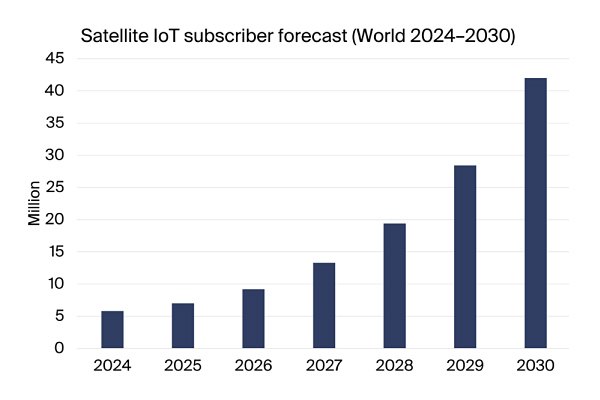
The global satellite IoT subscriber base exceeded 7 million connections in 2025, with a market forecast projecting 42 million by 2030. The projected 43.1% compound annual growth rate reflects more than new satellites: providers are also bringing orbital coverage closer to established terrestrial device technologies and operating systems.
These figures are a specific market estimate and forecast. They should be read within that model rather than combined with projections that use a different period, definition or methodology.
Established networks still account for much of the market
Iridium, ORBCOMM, Viasat/Inmarsat and Globalstar remain major satellite IoT operators. The market estimates put Iridium at 2.1 million subscribers following 6% growth, ORBCOMM at around 950,000 across its own and Viasat’s networks, and Globalstar at 540,000 at the end of 2025.
The wider operator landscape includes 44 businesses and initiatives in the assessment, with more than two dozen newer entrants. AST SpaceMobile, Geespace, Hubble Network, Kinéis, Lynk, Myriota, OQ Technology, Plan-S, Sateliot, Skylo and Starlink illustrate the range of approaches, many involving low Earth orbit architectures.
Satellite services are adopting familiar radio technologies
Several networks are using 3GPP technologies associated with 4G and 5G, while others use LoRa. Hubble Network is pursuing direct satellite communication from Bluetooth devices. These approaches seek to draw on device ecosystems already familiar to manufacturers rather than requiring every deployment to start with an entirely separate technology stack.
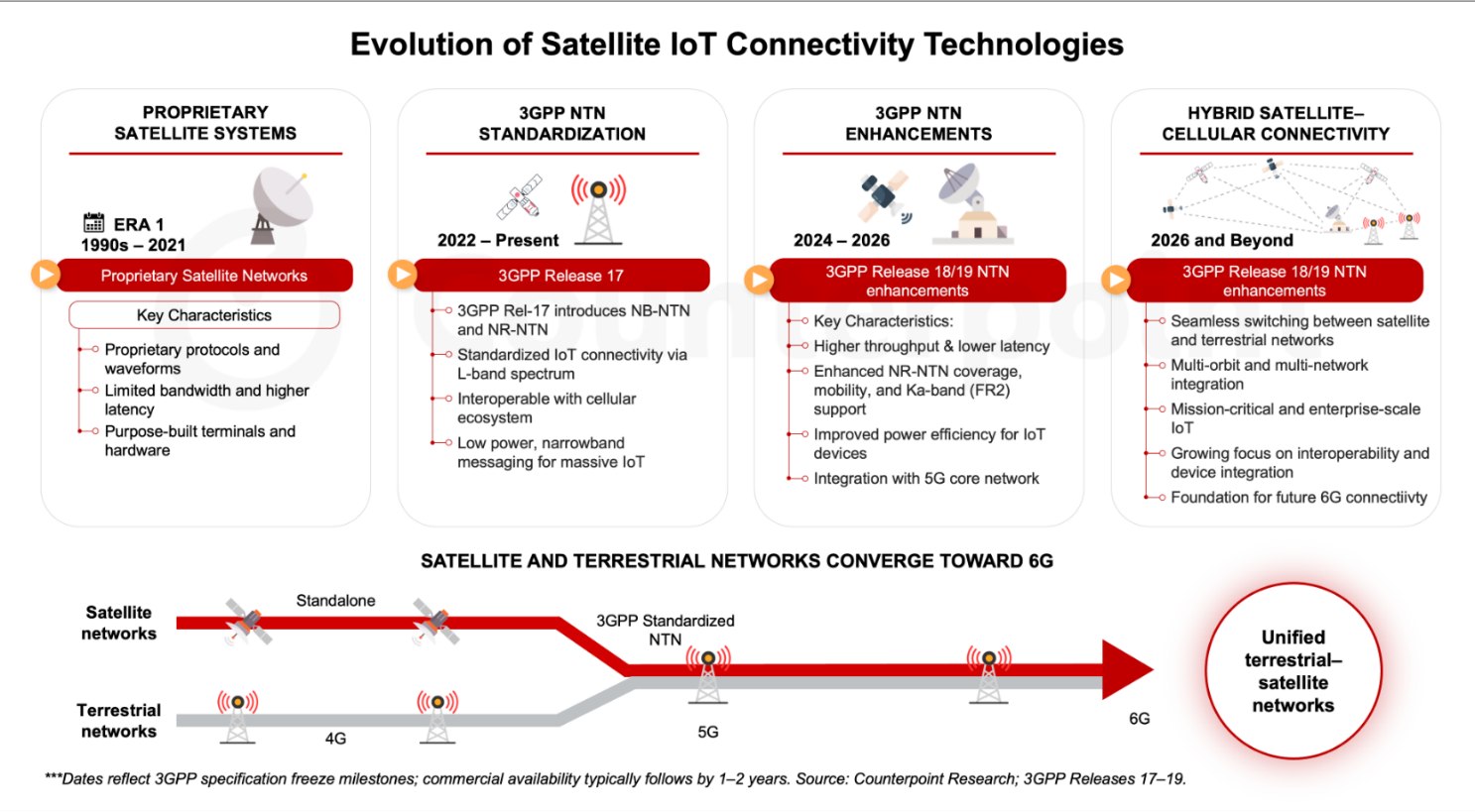
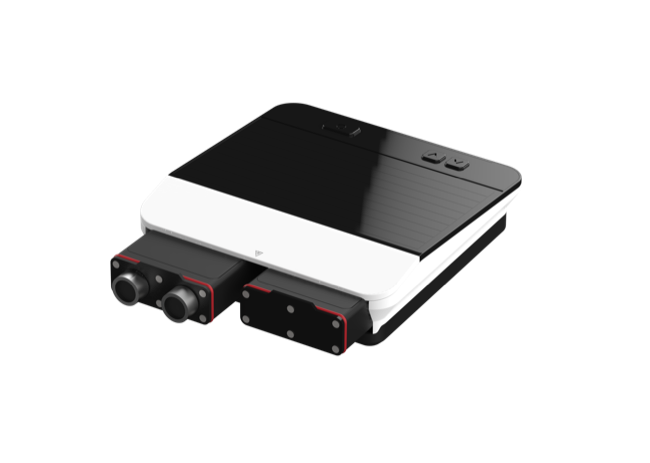
A conventional satellite addition could mean a dedicated radio, antenna and service. Standards-based non-terrestrial networking and hybrid designs create possibilities for sharing more of the hardware, management or integration work with terrestrial products. Compatible radios, antennas, power budgets and certification still matter.
Partnerships make hybrid coverage easier to offer
NB-IoT is being extended into low Earth orbit coverage through partnerships between mobile IoT businesses and satellite operators. Other projects combine cellular, satellite and Wi-Fi within one device architecture. The practical aim is to keep a useful communications path available as an asset moves between different types of coverage.
Skylo is particularly active in partnerships with established mobile operators and connectivity platforms. Other satellite providers, including AST SpaceMobile, Iridium, OQ Technology, Sateliot, Starlink, Terrestar and Viasat, are also developing operator relationships. These arrangements can make satellite service part of a broader connectivity portfolio.
Geography remains the basic reason to connect by satellite
Terrestrial services cover only around 10% of the Earth’s surface in the market assessment. Maritime routes, remote farmland, energy infrastructure, construction sites and transport corridors therefore create needs that conventional networks cannot always meet economically.
Asset tracking fits this model particularly well because equipment and goods may repeatedly enter and leave cellular coverage. A hybrid deployment can favour its available terrestrial link and use satellite service when that path disappears, provided the device and service support the transition.
Growth will depend on practical device integration
The forecast describes a market moving toward more integrated connectivity. For enterprises, the operational question is how well devices, platforms and service partners manage both terrestrial and satellite paths. The value of wider coverage depends on turning those paths into a service that fits the asset, its reporting pattern and the work performed with its data.