
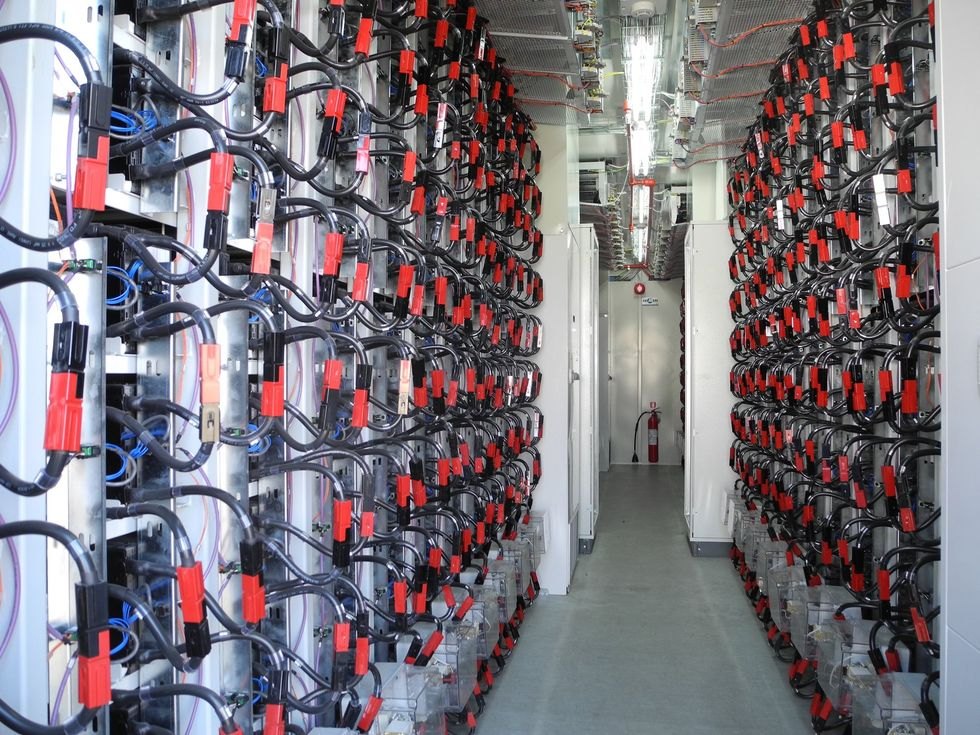
Battery energy storage helps electricity networks respond quickly as renewable generation and demand change. Predicting how those batteries will age is harder: real operation combines irregular power requests, changing temperatures, partial cycles and interactions between the battery and its supporting equipment.
The University of Sheffield’s Centre for Research into Electrical Energy Storage and Applications, CREESA, uses laboratory measurements alongside full-scale grid-connected assets to investigate that behaviour. The aim is to validate diagnostics and control methods against the conditions storage systems actually encounter.
A changing grid creates a changing battery duty cycle
A network with substantial wind and solar generation can experience steep changes in power balance, frequency excursions and rapid transients. Batteries can respond quickly, but the pattern of service affects their electrical, thermal and mechanical behaviour over time.
Conventional cycling tests remain useful, yet a simple sequence of repeated charge and discharge events cannot reproduce every commercial duty cycle. Real assets may spend time at partial charge, make frequent small adjustments, deliver short high-power events and recover on unpredictable schedules. Models need evidence from both controlled and operational settings.
A test environment connected to the working network
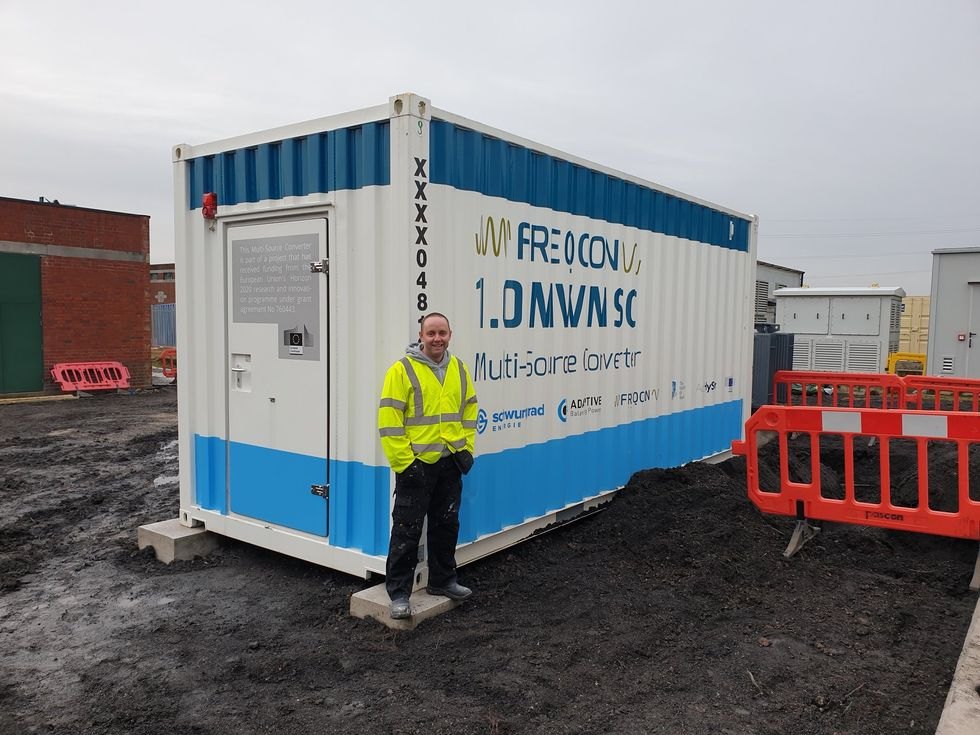
CREESA has an 11 kV, 4 MW network connection. Its equipment includes a 2 MW / 1 MWh lithium-titanate storage system and a 100 kW platform based on second-life vehicle batteries. The facility also supports work on flywheels, supercapacitors, hybrid architectures and fuel-cell technologies.
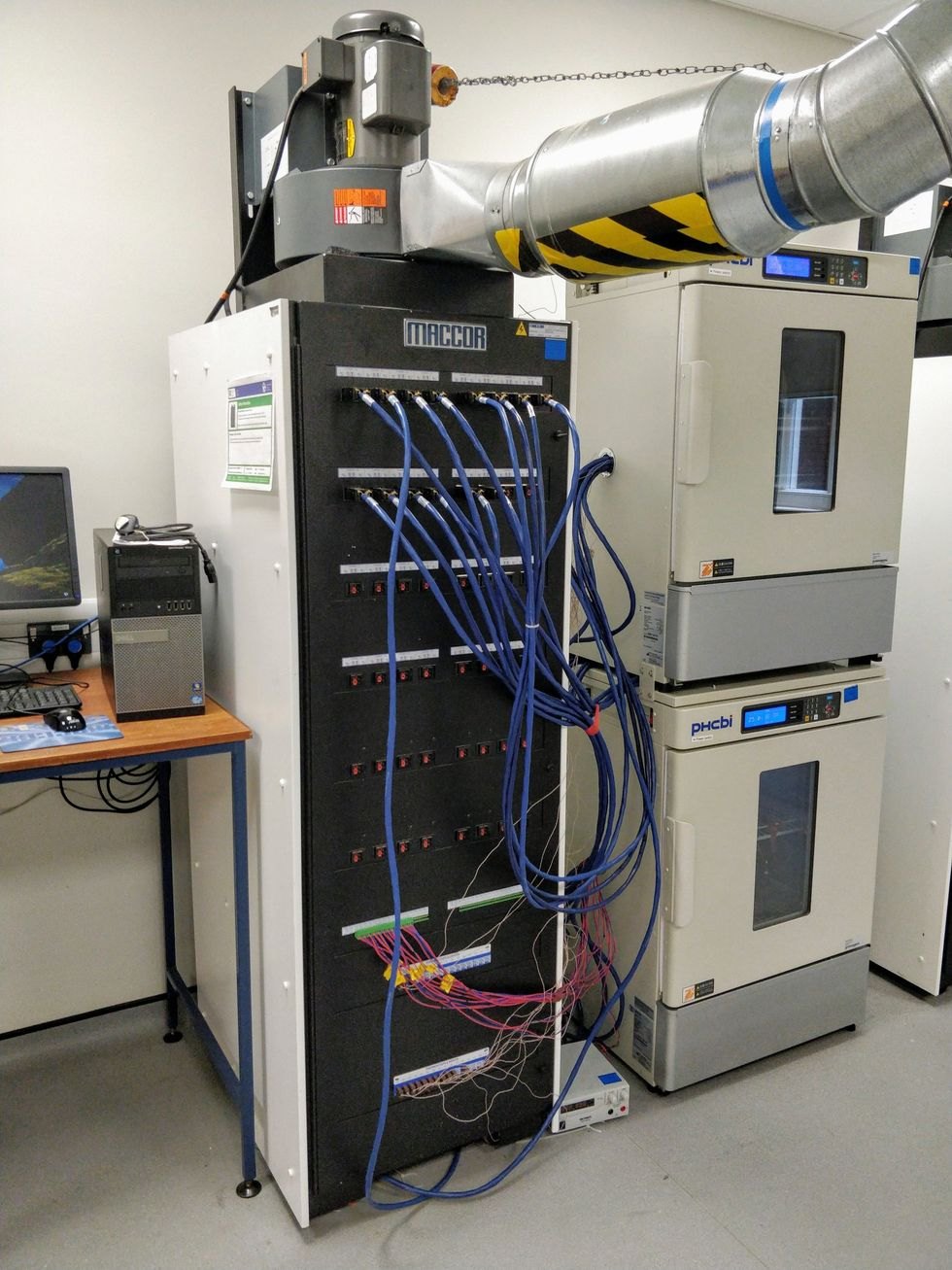
More than 150 cell-testing channels, environmental chambers and impedance-spectroscopy equipment provide a laboratory layer. High-speed data acquisition and integrated controls connect those measurements with system-level work on fault response, thermal behaviour and parameter estimation.
The grid connection lets researchers study genuine frequency and voltage disturbances as well as market-driven operation. Historical grid and market signals can also be replayed for repeatable full-power experiments, combining operational realism with the ability to compare results.
Megawatt-scale behaviour can expose hidden interactions
The lithium-titanate demonstrator has supported studies of fast response, synthetic-inertia-like behaviour and coordination between batteries and flywheels. It has also provided a working asset for operator training, market participation and development of dispatch and forecasting algorithms.
At this scale, cooling performance, auxiliary electricity use and the interaction of control loops can influence the result. Effects that appear small in a cell test may become important when a large installation follows rapidly changing set-points. Measuring those effects helps refine both system design and operating assumptions.
State estimates need to remain useful during rapid changes
Diagnostics must estimate state of charge, state of health and available power while the system is working. Sheffield’s research uses observers, Kalman filtering and combinations of physical models with machine learning to investigate estimates under irregular cycling and noisy measurements.
Other work examines online identification of equivalent-circuit parameters and the use of transient responses to understand power capability. The usefulness of a model depends on the measurements selected and on whether its assumptions remain valid under the conditions being observed.
Cells within the same installation do not age identically
Thermal gradients, uneven current distribution and operation near the ends of the charge range can cause cells to diverge. Understanding that imbalance informs balancing strategies, usable-capacity estimates and safety assessment at cell, module and container levels.
Lifetime research also examines micro-cycling, asymmetric duty cycles and the actual sequence of grid requests. Hybrid physical and machine-learning models can use those records to test ageing predictions that would be difficult to validate with a single idealised cycle.
Battery-flywheel coordination and other multi-technology systems add another layer. Control strategies and techno-economic models must consider which asset should provide a service, how dispatch affects ageing and whether the combined arrangement improves the useful life of the system.
The methods also have applications beyond the grid
Work with MOPO’s battery-swap systems in Sub-Saharan Africa applies characterisation and health-tracking methods to a different operating environment. These packs can encounter deep cycles, sustained heat and varying user behaviour without active cooling. Better understanding their condition can support longer useful service and more practical alternatives to fuel-powered generators.
Connecting research with operational decisions
Industry collaboration allows control methods, commissioning approaches and market strategies to be tested against practical constraints. Combining cell-level measurements with long-running, full-scale datasets provides a stronger basis for understanding degradation, refining dispatch and designing storage for the services it will actually perform.