Engineers are testing whether underground rock can become a practical source of hydrogen by deliberately accelerating reactions between water and iron-bearing minerals. Eden GeoPower is approaching the problem with high-voltage electrical pulses that fracture hard rock and create routes for water to reach fresh mineral surfaces.
The work connects a difficult geological question with a difficult commercial one. Producing hydrogen in a laboratory is possible; obtaining enough of it, for long enough and at an acceptable cost remains the larger test.
Why look for hydrogen underground?
Hydrogen is widely used as a chemical input, particularly in refining and fertiliser production. Global demand was approximately 100 million tonnes in 2024. Much of that supply is produced from fossil fuels, while making low-carbon hydrogen by renewable-powered electrolysis remains expensive in many settings.
Natural reactions between water and rock can generate hydrogen within the Earth. The discovery and small-scale use of a hydrogen reservoir near Bourakébougou in Mali helped renew interest in finding such resources elsewhere. Exploration has expanded, but observations of hydrogen do not automatically establish a reservoir that can sustain commercial production.
Finding a natural accumulation requires suitable source minerals, a place for gas to collect and a geological seal that keeps it underground. Stimulated geologic hydrogen takes a different route: create conditions that encourage hydrogen-generating reactions in accessible iron-rich rock.
Fractures expose the rock to water
Injecting water into a suitable formation allows iron-bearing minerals to react and release hydrogen. A dense rock mass may contain the necessary chemistry but offer too few pathways for water to reach it. Fracturing can increase both permeability and the surface available for reaction.
Eden’s founder, Paris Smalls, developed the electrical approach from research into rock strength and enhanced geothermal systems. Conventional hydraulic stimulation pushes fluid through a formation, but flow may concentrate in a limited set of existing cracks. Electrical stimulation aims to produce a more distributed fracture network.
Early field experiments used steady direct current. The method fractured softer carbonate rock and was associated with a 30% increase in oil output in one petroleum-reservoir test, but it was less successful in the hard formations relevant to geothermal energy and hydrogen. That limitation led the team to concentrate energy into short pulses.
Delivering a short, intense electrical discharge
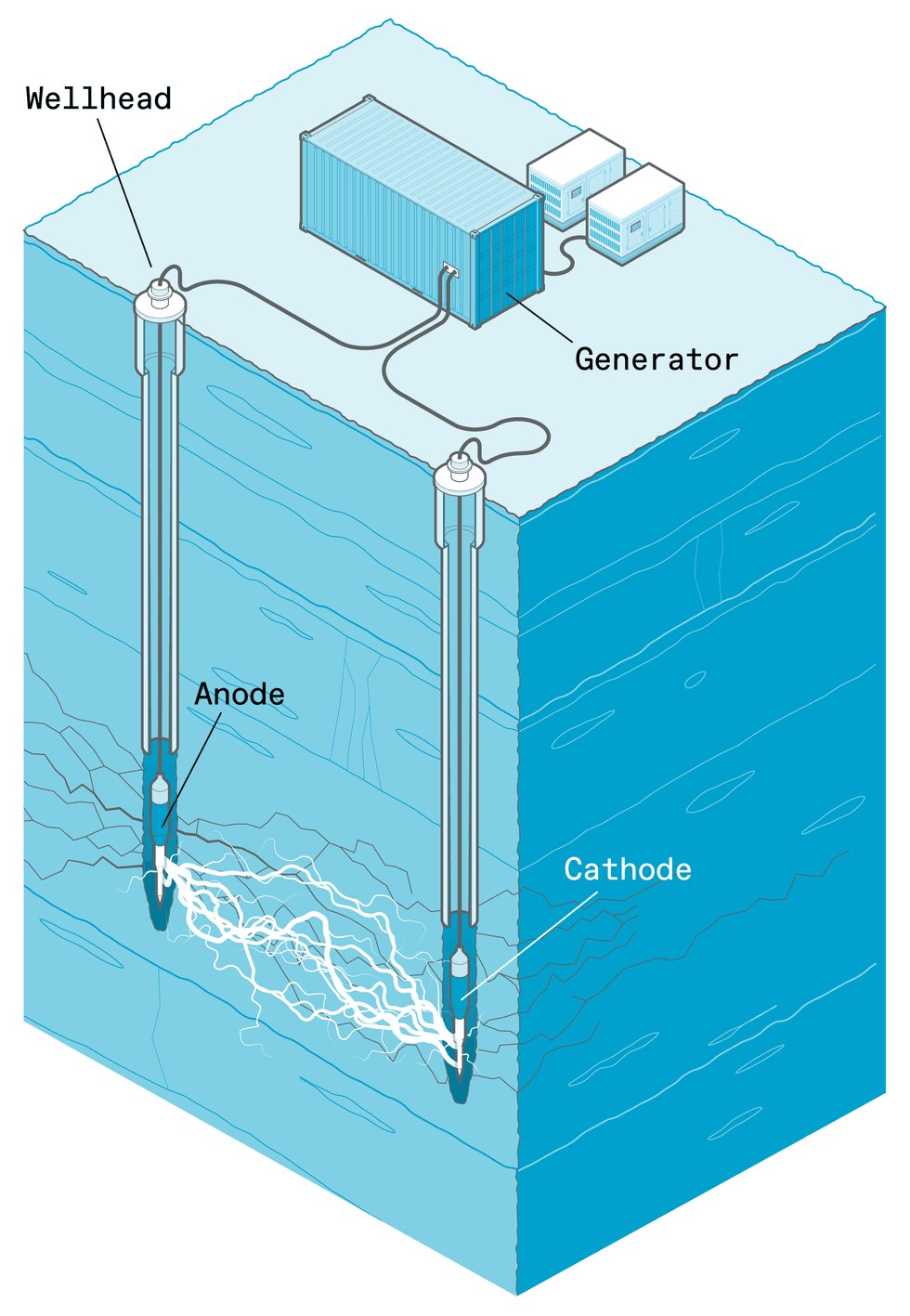
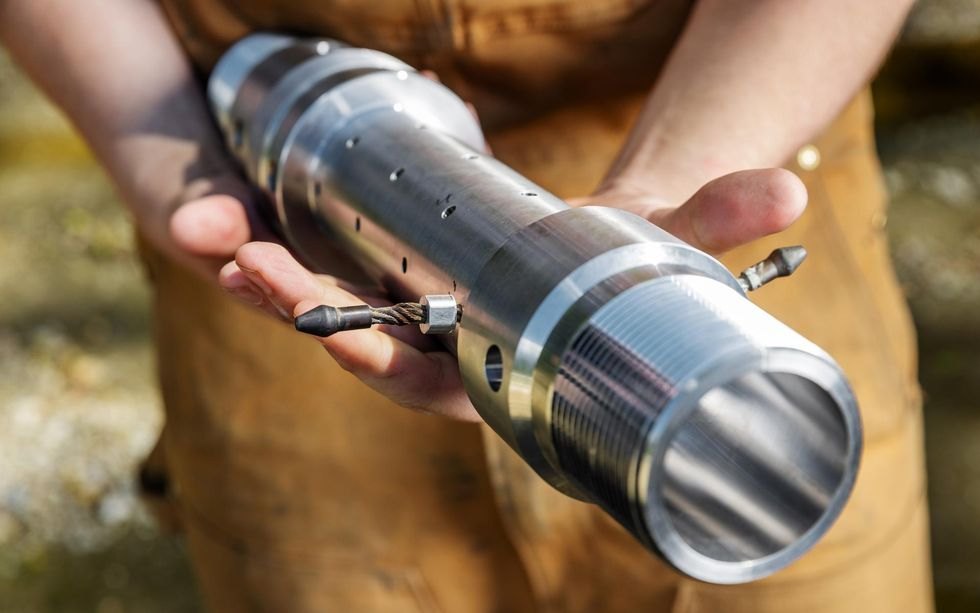
Pulsed-power systems release stored electrical energy over a very short interval. In Eden’s small rock experiments, electrodes at opposite ends of a sample created plasma channels within moist spaces between mineral grains. The rapid expansion of those channels generated forces that fractured the sample.
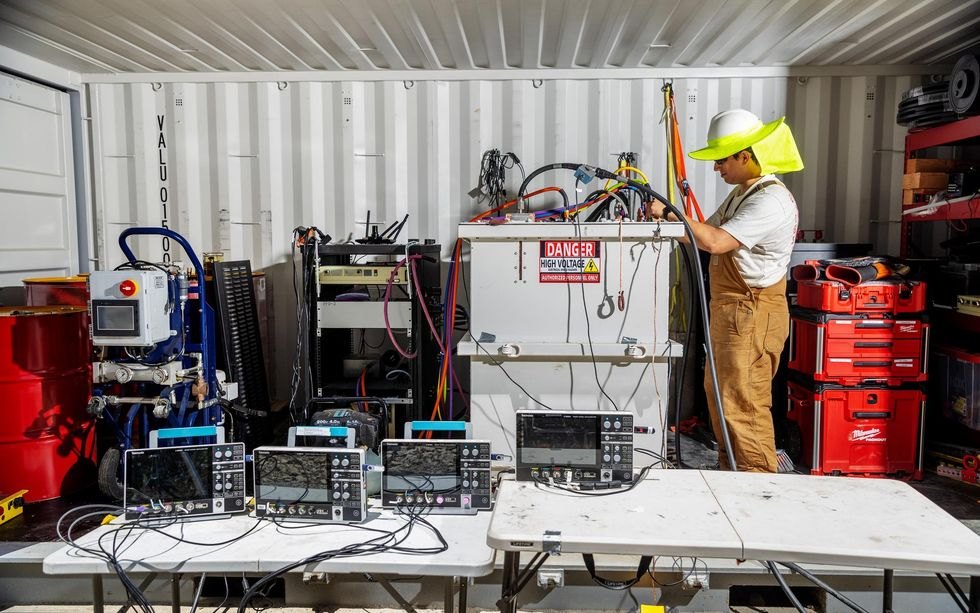
Field operation requires much greater voltage to act across metres of rock. Eden built Marx generators called Zeus and Thor. These charge capacitors in parallel and discharge them in series so that their voltages combine into a high-voltage pulse. Together, the machines can produce surges of several hundred kilovolts.
A hard-rock test in an abandoned Colorado mine increased permeability tenfold. Further work at a Massachusetts field site examines performance in other geological conditions. Pressure measurements underground and flow readings at the surface help the team assess how the fracture network changes.
Low energy use does not remove the time constraint
The generators’ average energy demand is relatively modest, but accumulating enough charge for a maximum pulse takes about a minute in the described setup. Roughly 100 pulses are needed to penetrate around 10 metres of hard rock. Working across larger distances or several depths can therefore take hours or days, making labour and field logistics important costs.
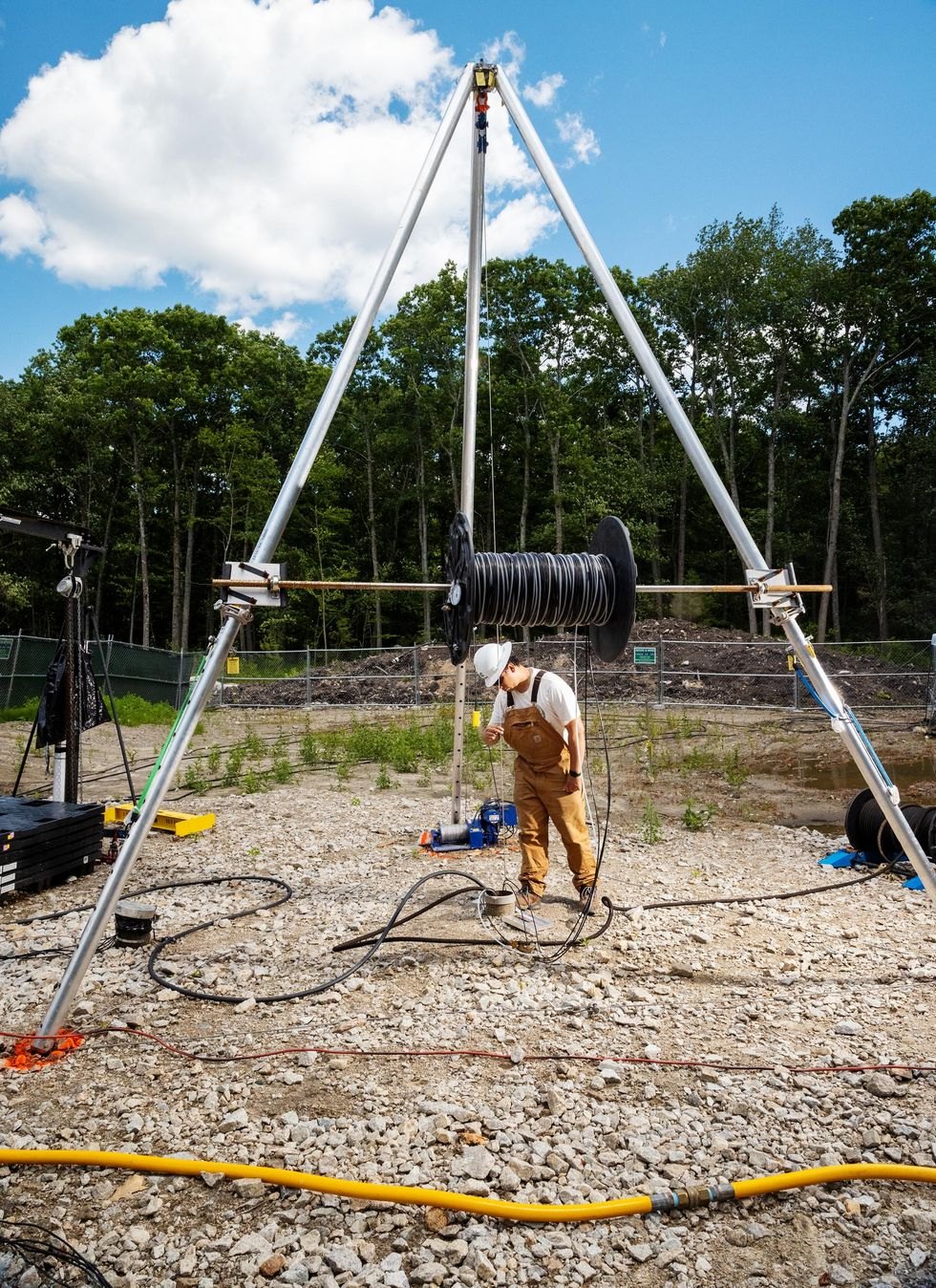
Laboratory samples treated with the pulsed-power method generated up to four times as much hydrogen as unfractured samples. That result is encouraging for further experiments, but it does not establish a profitable field production rate. A proposed hydrogen pilot still needs to demonstrate the complete sequence under practical conditions.
Heating, catalysts and mineral chemistry offer other routes
Temperature, acidity, mineral composition and microbial activity also affect production. Laboratory work points to approximately 200–300 °C as a favourable range for some hydrogen-generating reactions. A formation may already be permeable enough for water but too cool to react quickly.
GeoKiln is investigating borehole heaters adapted from petroleum applications. Vema Hydrogen is testing heated water with proprietary catalysts in Canadian pilot wells. Koloma is exploring timed injections of carbon-dioxide-bearing water that alter acidity and roughen mineral surfaces, exposing more area for reaction. These methods target different constraints and may need to be combined.
Keeping reactions productive remains an open problem
Research led by Rita Esuru Okoroafor at Texas A&M examines how stimulation methods interact over time. The readily accessible iron on a surface is gradually consumed, so a fast initial reaction can be followed by declining output. Mineral precipitates can also obstruct the water pathways.
Her laboratory and modelling work suggests that repeated stimulation and combinations of methods may be needed. Experiments with acid treatment investigate whether blocked pathways can be reopened and fresh surfaces exposed. The useful treatment will depend on the particular formation.
Commercial development must also resolve gas purification, storage, transport, environmental effects and overall costs. Electrical fracturing creates a promising experimental tool, but the viability of sustained geologic hydrogen production remains to be demonstrated.