
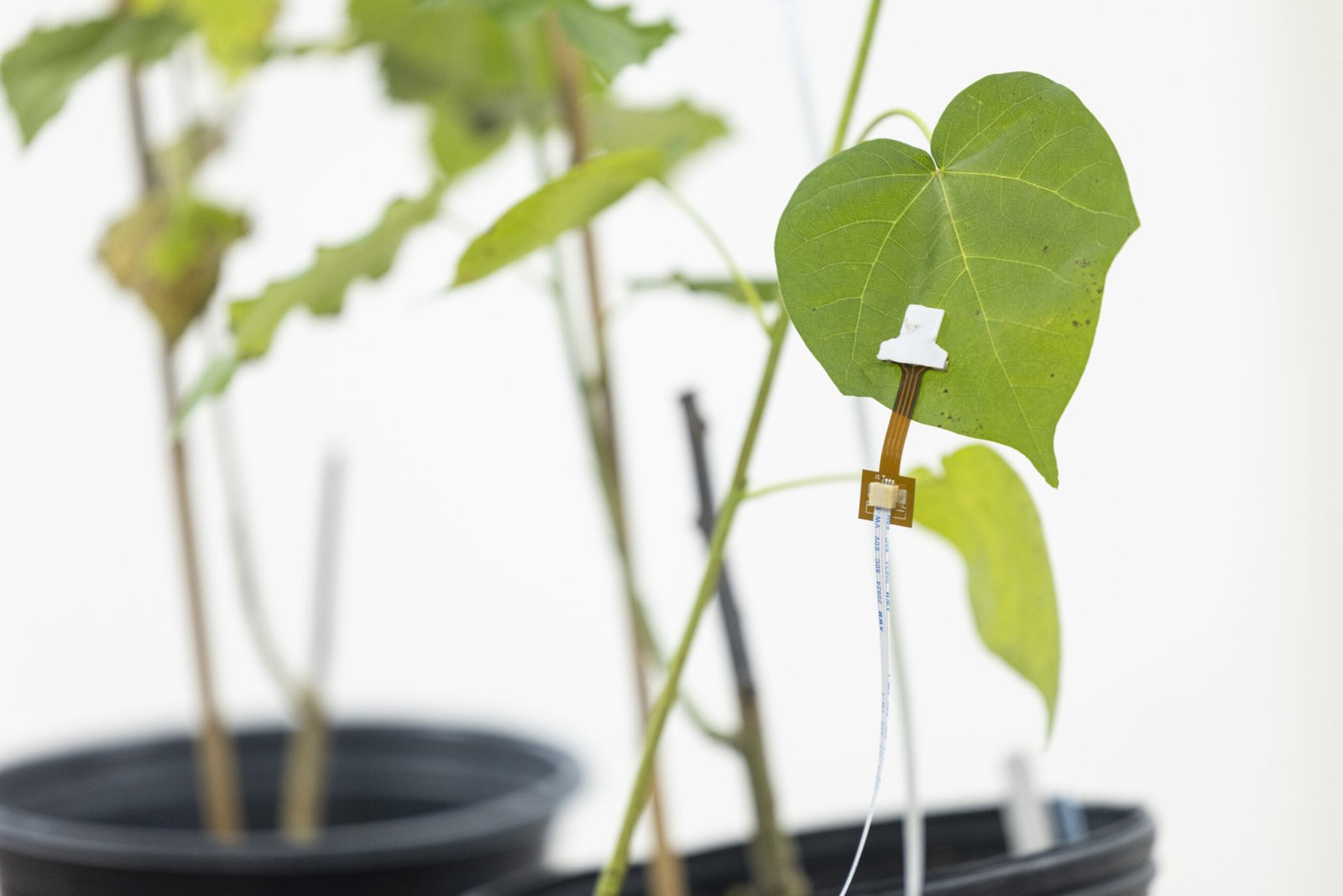
Plant responses could help growers identify emerging problems sooner. At the University of Georgia, Liang Dong is developing sensors that monitor crop signals associated with water stress, disease and insect pressure.
His work connects plant health measurements with soil and environmental monitoring. The aim is to help growers act while changes are still difficult to spot during routine crop inspections.
Starting with growers’ priorities
Conversations with Georgia farmers, crop researchers and Extension specialists have put crop biosecurity and drought management among Dong’s priorities. Coastal salinity adds another challenge, creating opportunities to study how sensing technologies perform across different crops and growing conditions.
Earlier warnings could help growers respond to threats and refine irrigation decisions. The research is focused on translating those earlier signals into decisions growers can use in the field.
Measuring the plant’s response
The sensors investigate chemical signals involved in plant growth and stress responses, including reactive oxygen species, plant hormones and volatile compounds. Dong also reports sensing capabilities for nutrient levels, transpiration and photosynthetic activity.
Together, those measurements could reveal changes within a plant before outward symptoms become apparent. Connecting them to useful decisions requires an understanding of which signals matter for each crop and production environment.
Turning measurements into decisions
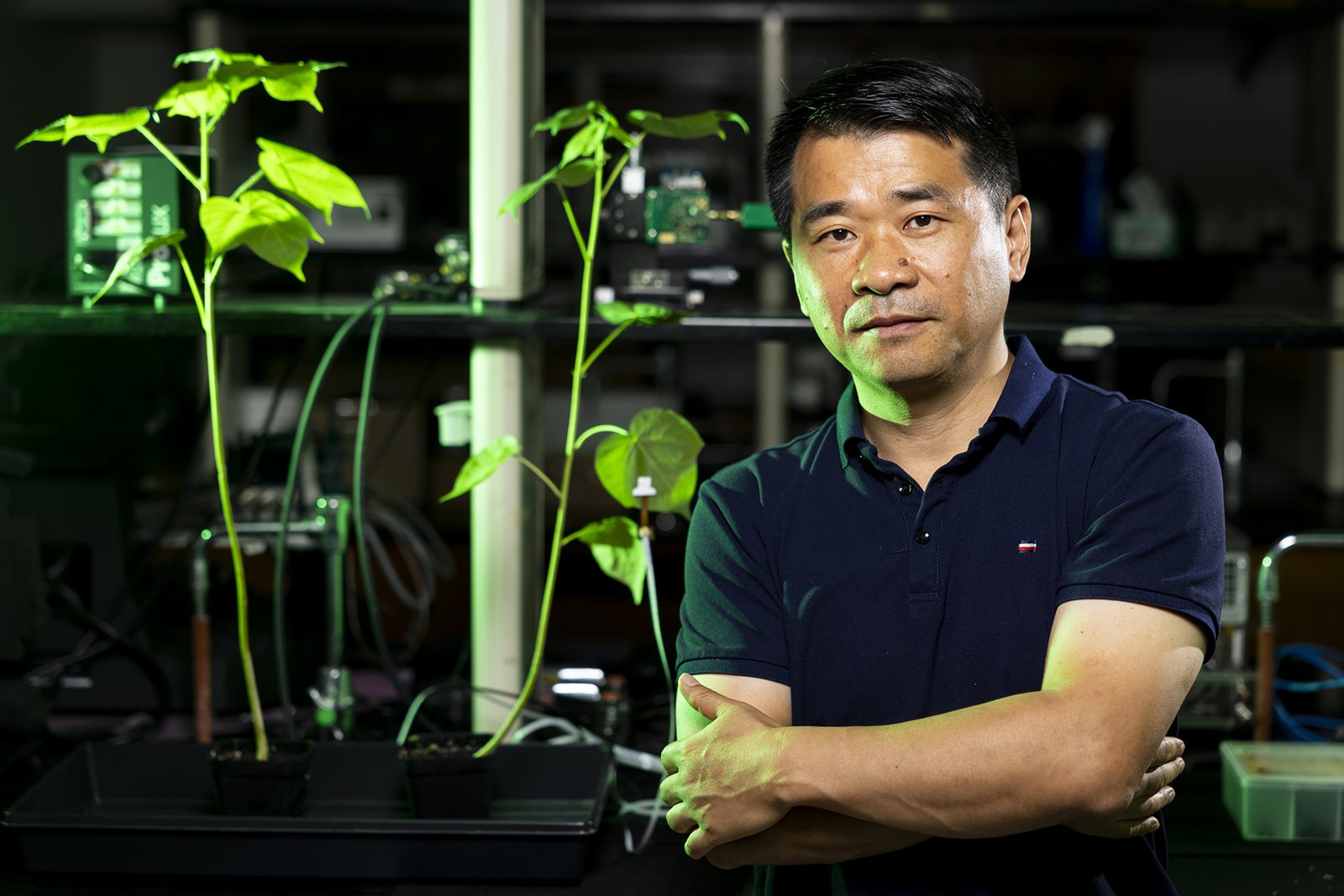
Dong holds appointments in UGA’s agricultural and engineering colleges and serves as associate director for research at its Institute for Integrative Precision Agriculture. The collaboration brings plant scientists, engineers, Extension specialists and data researchers into the same effort.
The longer-term ambition is continuous monitoring linked to recommendations growers can use. For Dong, success will depend on better production decisions and more efficient resource use, with possible future applications extending into livestock, poultry and forestry.